
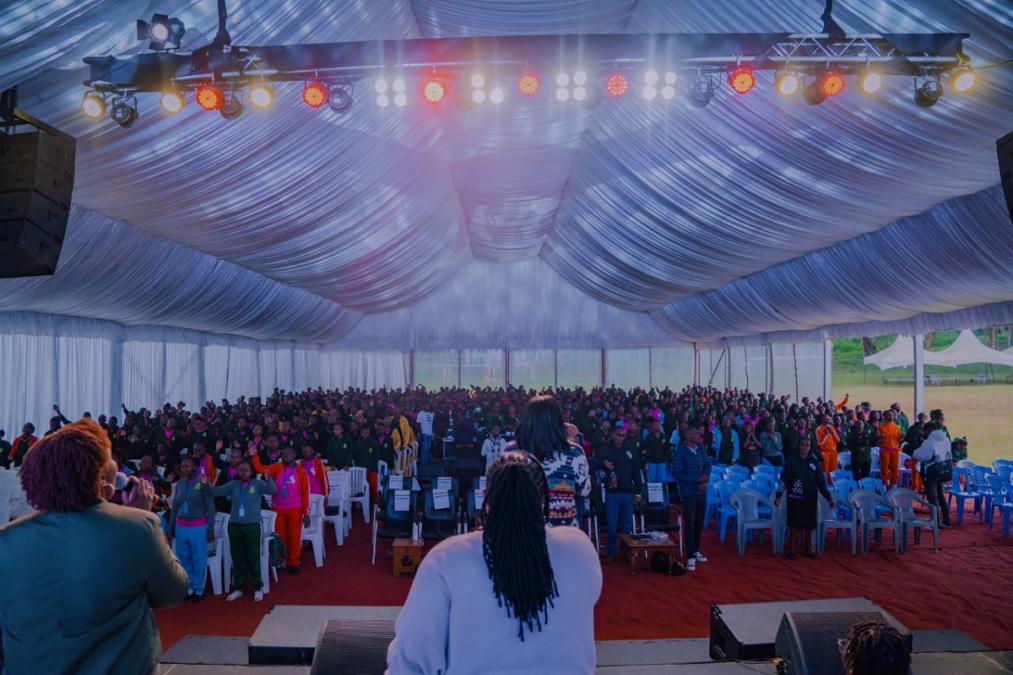
We Got You Events has produced corporate events across Nairobi for over seven years — conferences, product launches, award ceremonies, AGMs, gala dinners. What you're about to read is the process we use, shared openly. Use it well.
STEP 01: Define the Event Before You Do Anything Else
Before you call a venue, before you set a date, before you Google "event companies in Nairobi" — you need to answer four questions clearly. Everything else flows from these.
- What is the objective?
Is this a staff motivation event, a client entertainment evening, a product launch, an AGM, a leadership conference? The objective determines every other decision — venue type, décor tone, program flow, budget allocation. - Who is the audience?
Internal staff? External clients? C-suite? Mixed? A team of 40 on a retreat needs a completely different environment from a 300-person investor luncheon. Know your audience before you design the experience. - What is the budget envelope?
You don't need a final number yet. But you need a realistic range approved by whoever controls the spend. Starting venue conversations without a budget wastes everyone's time. - What date are you working toward?
Nairobi's corporate calendar has peak seasons — January to March, and September to November are busy. Book early or prepare to compromise on venue choice.
STEP 02: Build Your Timeline — Working Backwards
The most common mistake in corporate event planning is starting too late. In Nairobi, quality suppliers — caterers, AV companies, photographers, MCs — get booked weeks and sometimes months in advance.
Planning Timelines by Event Size:
- Small event (50–150 guests): Minimum 6–8 weeks out.
- Mid-size event (150–400 guests): Minimum 10–12 weeks out.
- Large event (400–1,000 guests): Minimum 3–4 months out.
- Gala dinner / awards ceremony: Minimum 3 months regardless of size.
- Annual conference / multi-day event: 4–6 months minimum.
If you're reading this with less time than the above, don't panic — but do engage a production company immediately. The right team can compress timelines. No team cannot.
STEP 03: Choosing the Right Venue in Nairobi
Nairobi has a wide range of corporate event venues — from five-star hotel ballrooms to outdoor tented setups in Karen and Westlands. The right venue depends on your event type, guest count, and the atmosphere you're creating.
- Hotel Ballrooms
Safari Park, Radisson Blu, Trademark Hotel, Villa Rosa Kempinski. Full-service: in-house catering, AV support, parking. Best for formal corporate, AGMs, gala dinners. - Conference Centres
KICC, Strathmore Business School. Purpose-built for conferences and workshops. Good for 100–500 delegates. - Outdoor / Tented
Karen, Gigiri, Rosslyn, Muthaiga. Maximum creative flexibility. You bring the tent, the décor, the catering — and the generator. Requires a strong production team. - Unique Spaces
Rooftop venues, private gardens, the Nairobi National Park perimeter. For events that need to leave a lasting impression.
Always do a site visit before signing a venue contract. Walk the space at the time of day your event runs. Check the parking, the acoustics, the power supply, the loading access, and the contingency for rain. A beautiful venue with no generator backup is a liability.
STEP 04: Build Your Supplier Team
A corporate event in Nairobi typically involves six to ten supplier categories. Know what you need before you start calling. We spoke about this in a previous article
- Production / Event Management Company
- Catering & F&B
- Sound & AV Equipment
- LED Screens & Technical Crew
- Lighting Design
- Stage & Tent Structure
- Décor & Floral
- Photography & Videography
- MC / Host
- Security & Crowd Management
- Generator / Power Backup
- Branding & Signage
The advantage of working with a full-service events production company like We Got You Events is that you don't manage twelve separate supplier relationships. You manage one. The production team coordinates the rest — and takes accountability for how it all fits together on the day.
STEP 05: Budget Allocation — Where the Money Should Go
When clients ask us how to split a corporate event budget, we give them a starting framework:
- Venue: 20–30% — higher for hotel ballrooms, lower for outdoor tented setups.
- Catering & F&B: 25–35% — the largest single line item for most corporate events.
- Production & AV: 15–25% — sound, lighting, LED screens, stage, technical crew. Do not cut this line.
- Décor & Branding: 10–15% — flowers, linen, signage, branded elements.
- Photography & Video: 5–8% — most companies underbudget here and regret it.
- Entertainment / MC: 5–10% — depends entirely on the program.
- Contingency: 10% — non-negotiable. Events throw surprises. Have the buffer.
STEP 06: The Day-of Essentials Nobody Tells You
You can plan everything perfectly and still have a difficult event day if you haven't prepared for execution.
- Run a technical rehearsal
Every presentation, every video, every microphone transition needs to be tested before the first guest arrives. Never let your CEO hit an unexpected mic issue on a live stage. - Prepare a program run sheet
A detailed, time-stamped document that every supplier and crew member holds. Not a general agenda — a second-by-second production document. This is what separates professional events from expensive chaos. - Assign a dedicated client liaison
On the event day, the organizer should not be managing logistics. You should be hosting. Assign someone whose only job is to make sure the program holds. - Brief your suppliers as a team
A joint briefing 48 hours before the event ensures everyone knows the timing, the VIP protocol, the emergency contacts, and the contingency plan. One call. Everyone aligned.
The sign of a well-run corporate event is that guests have no idea how much work happened behind the scenes. That's not an accident — it's the result of a production team that absorbed every problem before it reached the floor.
Closing Thoughts
Planning a corporate event in Nairobi is genuinely manageable when you know the sequence. Define the brief. Lock the budget. Book early. Build the right supplier team. Rehearse. Execute with a detailed run sheet. These are not secrets — they're just discipline.
At We Got You Events, this is what we do — not just for large productions, but for events of every size. We come in at the brief stage, help you plan intelligently, and stay until the last guest leaves and the last chair is cleared. If you're in the planning stages of a corporate event in Nairobi and want a production team in your corner, we're a conversation away.
Planning a Corporate Event? Let's Talk.
Send us your brief — even a rough one. We'll come back with a plan, a realistic budget, and a team that knows how to deliver.
Email: info@wegotyoueventske.com
Phone: +254 725 225 036
Website: www.wegotyoueventske.com
We Got You Events Ltd · Nairobi, Kenya · Every detail matters.